



25 $
We currently only accept Crypto payments on the website. If you’d like to pay via PayPal or Credit Card, please contact us via email shoppycourses@gmail.com and we will provide you with a secure payment link

 GET EXTRA DISCOUNTS
 CHECK ALL OUR EXCLUSIVE COURSES HERE
 Sale Page: https://jj.jjsimontrades.com/schedule-call
👉 Check All Exclusive Courses HERE 👈
Proof Download
JJ SIMON – Trading Mentorship 2026 With Indicator and Strategies
A Structured Approach To Futures Trading And Prop-Firm Execution
Trading futures is not simply about finding an entry and hoping the market moves in the expected direction.
A complete trading process involves market analysis, timing, position management, risk controls, statistics, execution,
and the ability to follow predefined rules when conditions change.
JJ SIMON – Trading Mentorship 2026 With Indicator and Strategies is built around this broader view of trading.
The program combines JJ Simon’s quantitative trading approach with futures education, execution principles, risk management,
trading psychology, and prop-firm strategies.
The official program currently positions the mentorship around a quantitative strategy designed specifically for traders working
toward funded accounts and consistent execution.
Rather than treating trading as a collection of random indicators or disconnected setups,
the curriculum is organized around developing a repeatable process that connects analysis with execution and risk.
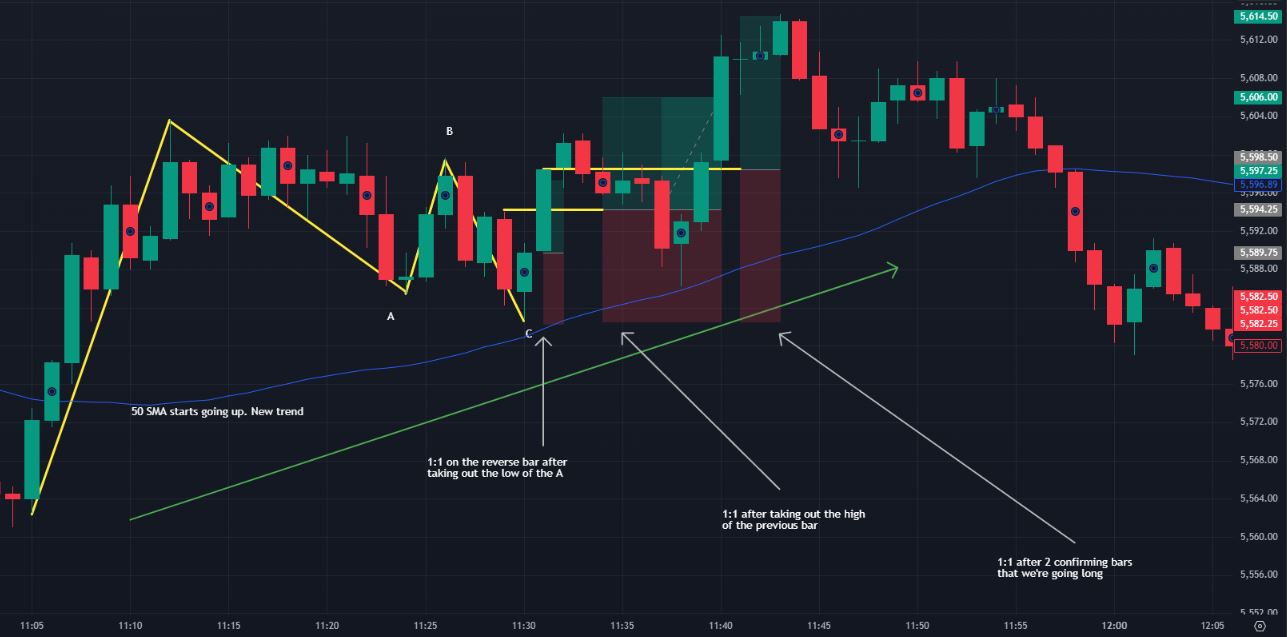
Understand JJ Simon’s Quantitative Trading Strategy
At the center of the mentorship is JJ Simon’s quantitative approach to futures trading.
The program presents trading as a process that can be evaluated through rules, probabilities, statistics, and historical observations rather than relying entirely on intuition.
This perspective introduces traders to concepts such as:
Quantitative decision-making
Statistical thinking
Probability
Expected outcomes
Market structure
Trade selection
Strategy consistency
Data-driven evaluation
A systematic framework can also make it easier to review decisions after a trading session because individual trades can be compared against predefined criteria
rather than judged solely by whether they made or lost money.
Fair Value, Market Structure And Entry Conditions
Supporting descriptions of the mentorship identify a specific futures methodology built around fair-value reference levels, market-structure shifts,
displacement, and volatility-adjusted risk.
One third-party curriculum summary describes the strategy as particularly focused on NQ futures and structured trading windows.
This creates a framework for thinking about an entry as a sequence of conditions rather than a single signal.
Important concepts include:
Fair-value areas
Market Structure Breaks
Break of Structure concepts
Displacement candles
Price reactions
Volatility
Entry confirmation
Stop placement
Risk-to-reward considerations
The emphasis is on understanding why a setup qualifies instead of entering simply because an indicator happens to flash a signal.
Be the first to review “JJ SIMON – Trading Mentorship 2026 With Indicator and Strategies”
Related products

Forex & Trading & NFT

Forex & Trading & NFT

Forex & Trading & NFT

Forex & Trading & NFT

Forex & Trading & NFT

Forex & Trading & NFT
Forex & Trading & NFT

Forex & Trading & NFT
Reviews
There are no reviews yet.