

105 $
We currently only accept Crypto payments on the website. If you’d like to pay via PayPal or Credit Card, please contact us via email shoppycourses@gmail.com and we will provide you with a secure payment link

 GET EXTRA DISCOUNTS
 CHECK ALL OUR EXCLUSIVE COURSES HERE
Sale Page: https://theaiexecutiveteam.com/workshop-offer
👉 Check All Exclusive Courses HERE 👈
Proof Download
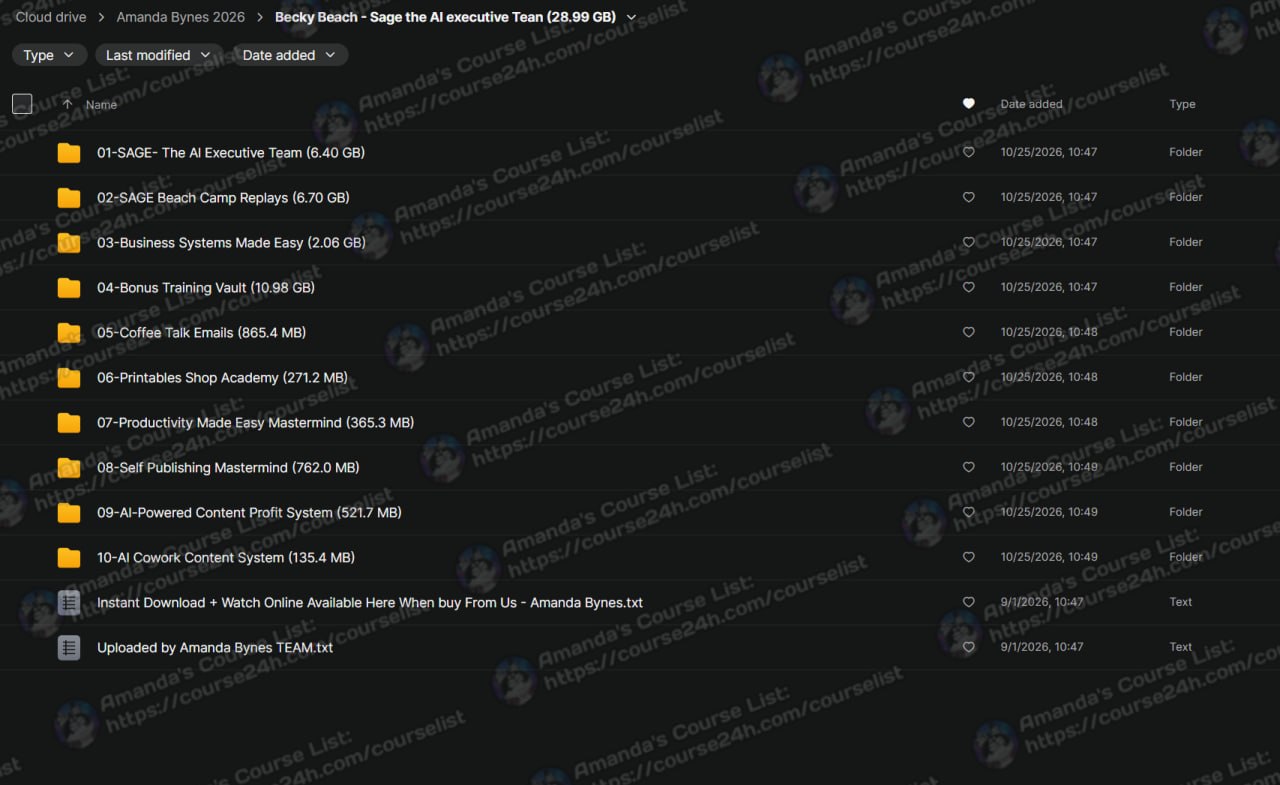
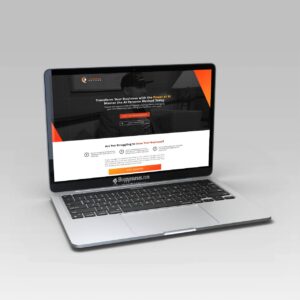
Becky Beach – Sage the AI executive Tean
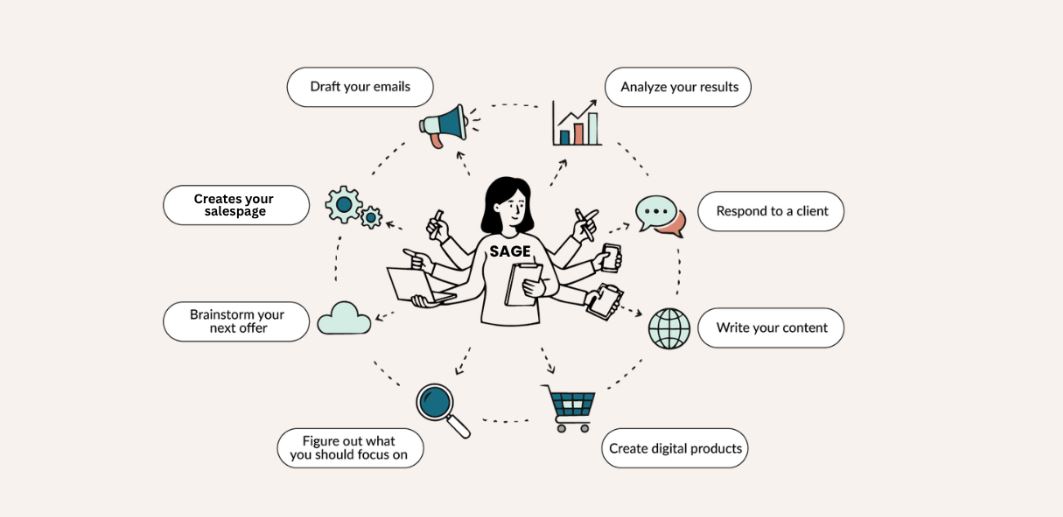
Running an online business often means switching between content creation, marketing, customer support, product development, analytics, and strategic planning.
Although AI tools can help with many of these tasks, using several disconnected assistants can create another problem:
repeatedly explaining your business, correcting generic outputs, and managing workflows that never quite fit together.
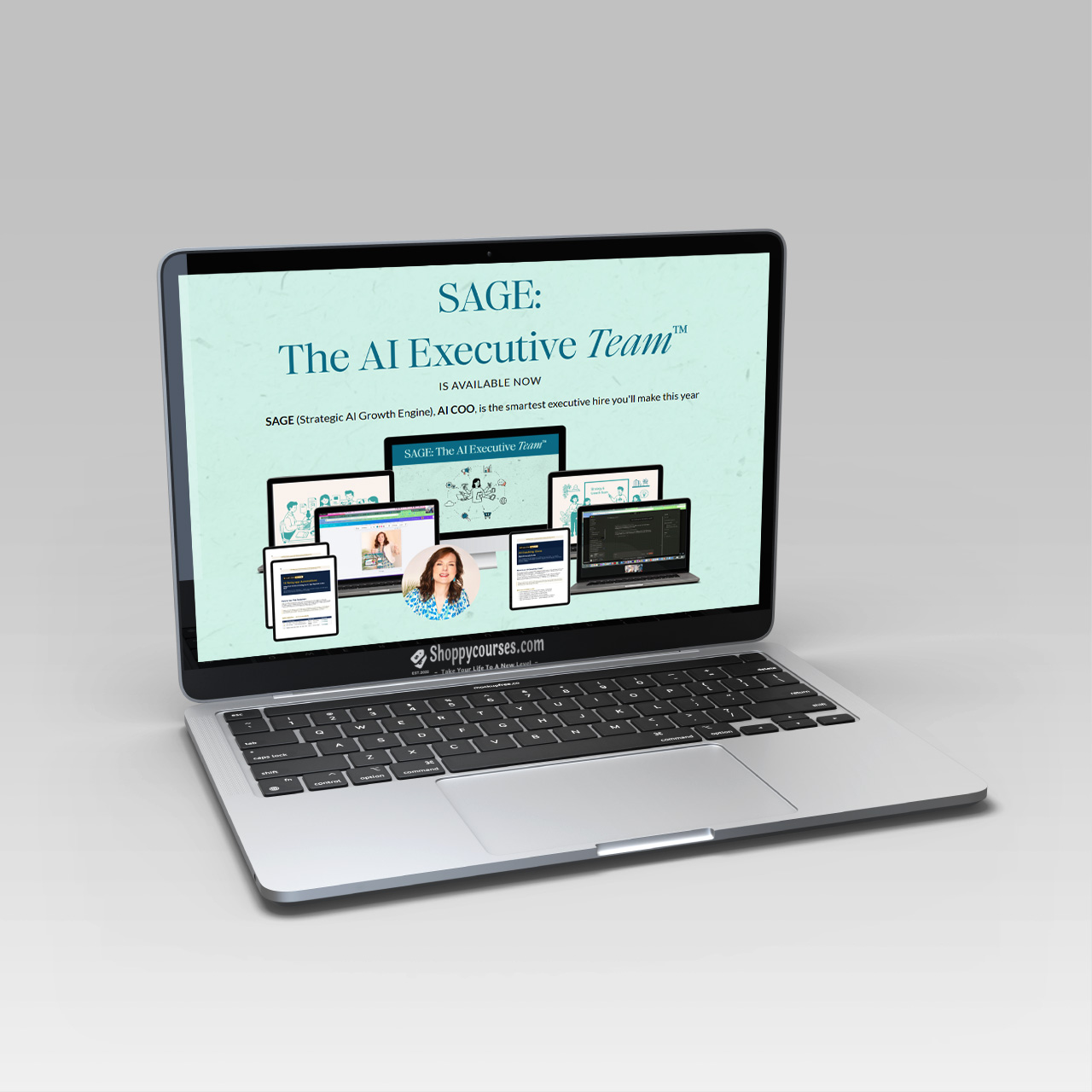
SAGE: The AI Executive Team is designed to address this challenge by organizing AI capabilities into a coordinated business operating system.
SAGE stands for Strategic AI Growth Engine, and its central concept is to give entrepreneurs a structured AI team
that can support different business functions while maintaining a consistent understanding of their brand, offers, audience, and working preferences.
Rather than offering only a collection of prompts,
the program combines an AI operating framework, role-based agents, business context documents, and guided setup resources.
It is aimed at entrepreneurs who want to integrate AI into their daily operations instead of treating it as an occasional writing assistant.
Train AI to Understand Your Brand
One of the most important components of SAGE: The AI Executive Team is its Business Branding Guide.
This document helps establish how the AI should communicate, what the business stands for, who it serves, and which language and messaging choices are appropriate.
Without a clear reference, AI-generated content can sound generic or inconsistent.
A structured brand guide provides a shared foundation for producing marketing materials, emails, product descriptions, and customer responses.
The system encourages users to define elements such as:
Brand personality, tone, and preferred writing style.
Target audiences and the problems the business helps solve.
Products, services, offers, and key differentiators.
Words, claims, and communication styles to avoid.
Brand values, boundaries, and decision-making preferences.
SAGE also includes a learning-loop concept that allows users to refine their business context over time.
By reviewing outputs, adding examples, and updating instructions, entrepreneurs can gradually improve the relevance of the system’s responses.
The quality of the result depends on the quality of the information supplied and the user’s willingness to review and refine the system.
AI can help maintain consistency, but it still requires human judgment and oversight.
Improve Sales Pages and the Customer Experience
Effective marketing depends on more than persuasive writing.
Customers also need to understand an offer, navigate a website, and complete a purchase without unnecessary confusion.
The UX department in SAGE is designed to help entrepreneurs evaluate customer-facing materials and identify possible obstacles to conversion.
Its advertised capabilities include sales-page audits, copy clarity reviews, product usability reviews, and workflow visualization.
This can be particularly useful for digital product businesses,
where unclear instructions, confusing page layouts, or weak calls to action may undermine an otherwise strong offer.
A structured review process can help users ask questions such as:
Is the main value proposition easy to understand?
Are the most important benefits clearly explained?
Does the page address likely customer questions?
Is the next step obvious to the visitor?
Can customers use the product without unnecessary friction?
SAGE also includes a masterclass on Claude Design, giving users an opportunity to explore AI-assisted design systems and visual workflows.
These tools are best viewed as aids to evaluation and iteration, rather than replacements for user research or actual conversion data.
Be the first to review “Becky Beach – Sage the AI executive Tean”
Related products






Reviews
There are no reviews yet.