

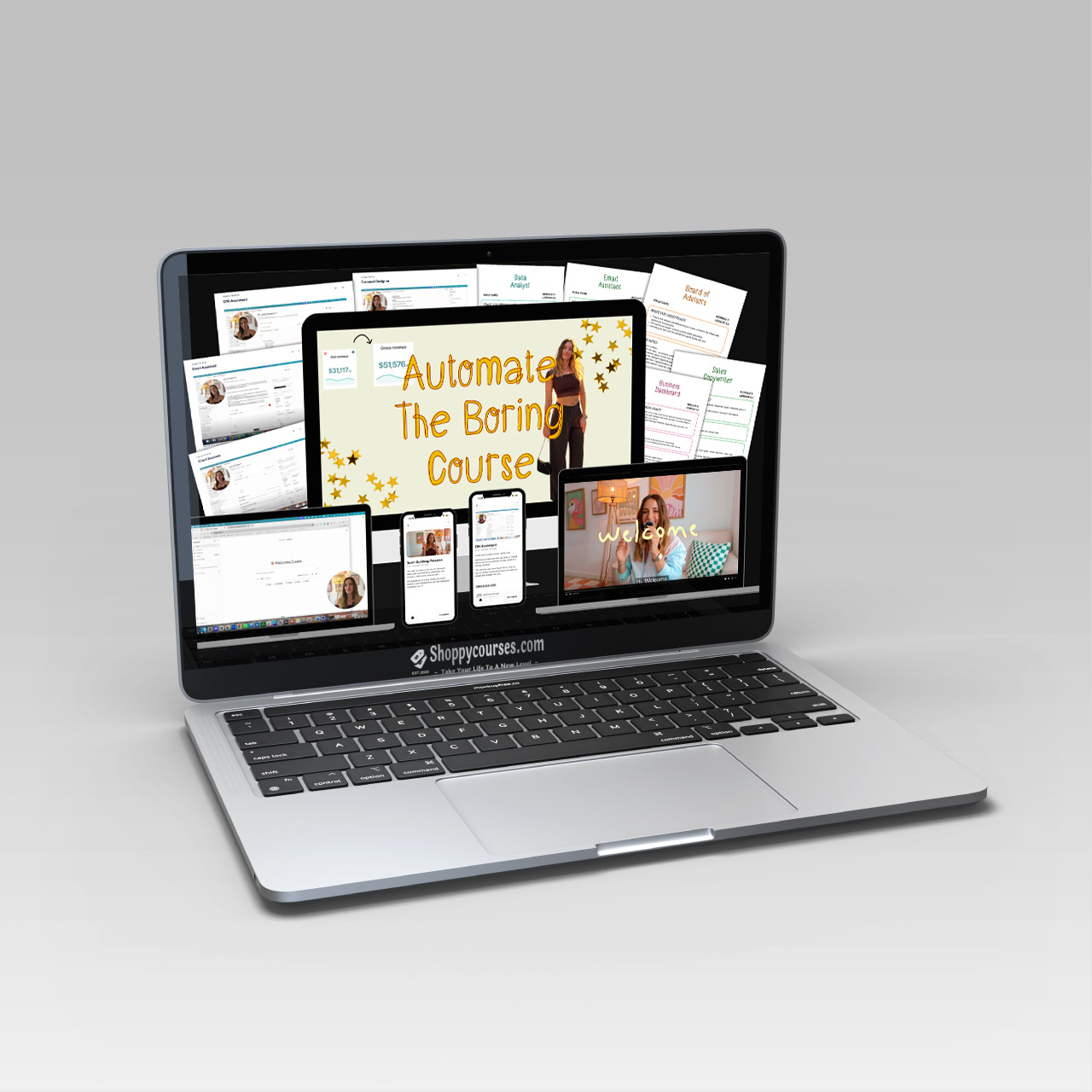
30 $
We currently only accept Crypto payments on the website. If you’d like to pay via PayPal or Credit Card, please contact us via email shoppycourses@gmail.com and we will provide you with a secure payment link

 GET EXTRA DISCOUNTS
 CHECK ALL OUR EXCLUSIVE COURSES HERE
 Sale Page: https://automatetheboringclub.com/
👉 Check All Exclusive Courses HERE 👈
Proof Download
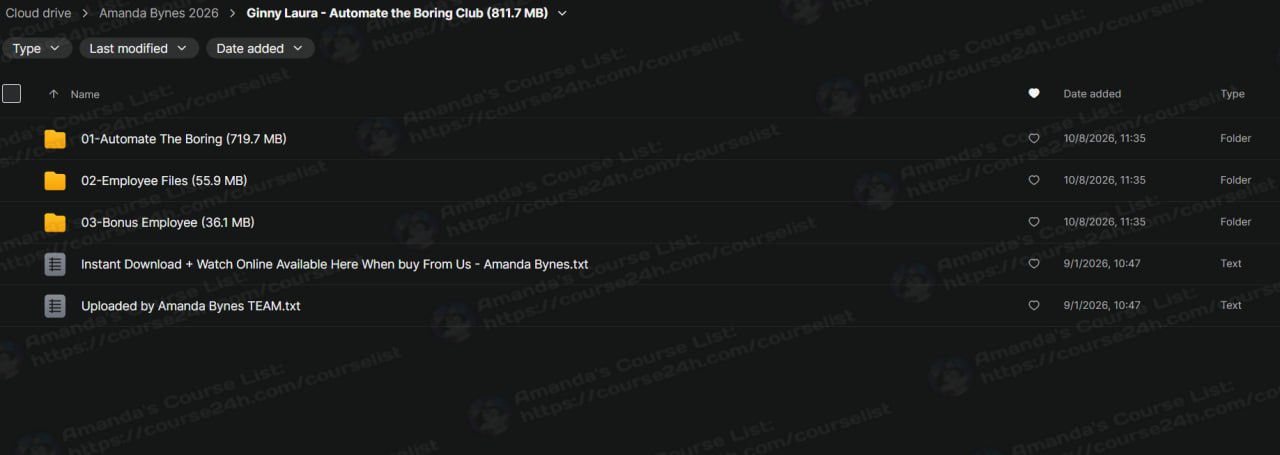
Ginny & Laura – Automate the Boring Club
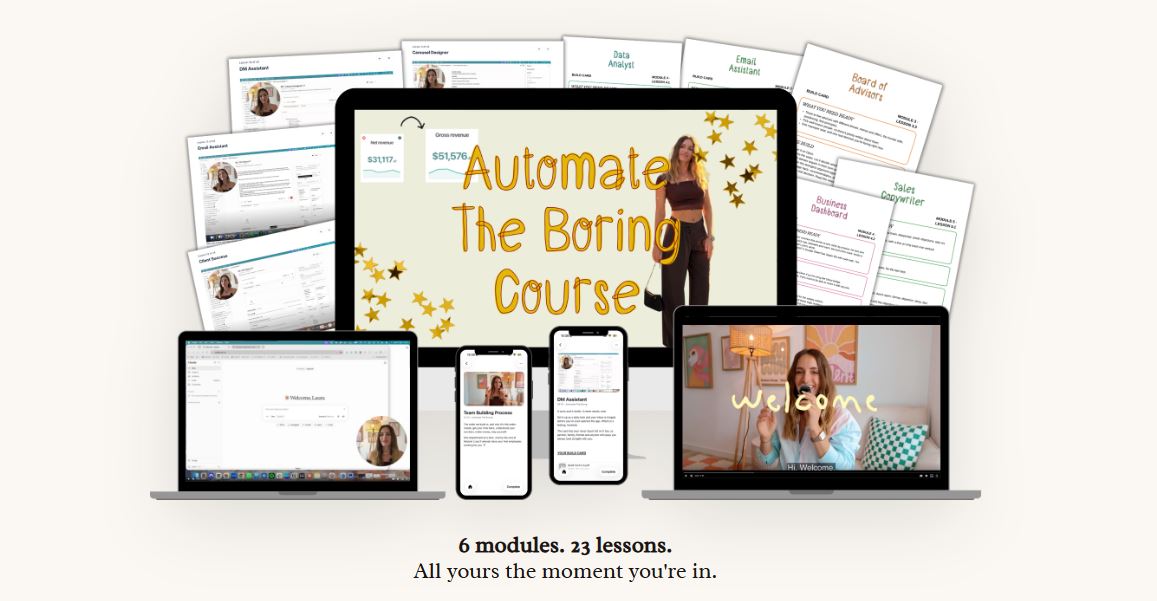
Turn Repetitive Business Work Into a More Efficient System
Running a business often means balancing creative work, marketing, customer communication, research, and day-to-day administration.
Even when each task seems manageable on its own, the combined workload can leave little time for strategic planning or business development.
AI automation offers another way to approach these responsibilities.
Instead of handling every recurring task manually, business owners can create AI-assisted workflows that support specific activities,
follow defined processes, and help organize information.
Automate the Boring Club focuses on the practical side of applying AI to everyday business operations.
Its central concept is to think beyond isolated prompts and explore how AI can be configured to support repeatable responsibilities
across different business functions.
The approach is particularly relevant to entrepreneurs and small teams who want to investigate AI as an operational tool
rather than simply use it to generate occasional pieces of content.
Use AI to Support Business Analysis and Reporting
Business owners often collect more information than they have time to review.
Marketing performance, customer feedback, sales figures, and industry developments can all contain useful signals,
but extracting those signals manually may require considerable effort.
AI-assisted analysis can help turn selected information into summaries, comparisons, and questions for further investigation.
Potential use cases include:
Data analysis: Examine structured information and request explanations of notable patterns.
Dashboard support: Summarize key metrics and highlight areas that deserve closer attention.
Trend monitoring: Organize relevant news and developments for periodic review.
Research summaries: Consolidate findings from multiple sources into a structured briefing.
Performance reviews: Compare selected results against previously defined objectives.
Decision support: Generate hypotheses and follow-up questions that guide additional analysis.
These applications are most useful when the underlying information is reliable and the task is clearly defined.
AI-generated conclusions should not be treated as automatically correct.
Numerical results, source material, assumptions, and interpretations need to be checked before they inform significant business decisions.
For small businesses, the practical opportunity is to make information easier to review without confusing an AI-generated explanation with verified evidence.
Coordinate Workflows Across Different Business Functions
Automation becomes more valuable when individual tasks fit into a broader process.
A content workflow, for example, may begin with research, continue through drafting and editing, and end with human approval.
A sales workflow may involve reviewing an offer, checking supporting information, and preparing launch materials.
Connecting related responsibilities can help reduce duplicated work and make handoffs easier to manage.
Useful workflow-design principles include:
Define the trigger: Determine what event or request starts the workflow.
Specify the required inputs: Identify the documents, data, instructions, or context needed.
Separate the steps: Break complex tasks into smaller stages with clear responsibilities.
Set output requirements: Decide what a completed step should produce.
Add review checkpoints: Require approval before sensitive or consequential actions proceed.
Document exceptions: Define what should happen when information is missing or an unexpected result occurs.
Test before expanding: Validate the workflow on a small scale before relying on it for important operations.
A practical system should be understandable enough that its owner can troubleshoot it, update its instructions, and recognize
when it is no longer performing as intended.
This is especially important when a business depends on multiple AI-assisted workflows. A small error in an early stage can affect later outputs,
so clear boundaries and verification steps matter.
Be the first to review “Ginny & Laura – Automate the Boring Club”
Related products

Business




Reviews
There are no reviews yet.