



30 $
We currently only accept Crypto payments on the website. If you’d like to pay via PayPal or Credit Card, please contact us via email shoppycourses@gmail.com and we will provide you with a secure payment link

 GET EXTRA DISCOUNTS
 CHECK ALL OUR EXCLUSIVE COURSES HERE
 Sale Page: https://mindfulline.com/wealthcode
👉 Check All Exclusive Courses HERE 👈
Proof Download
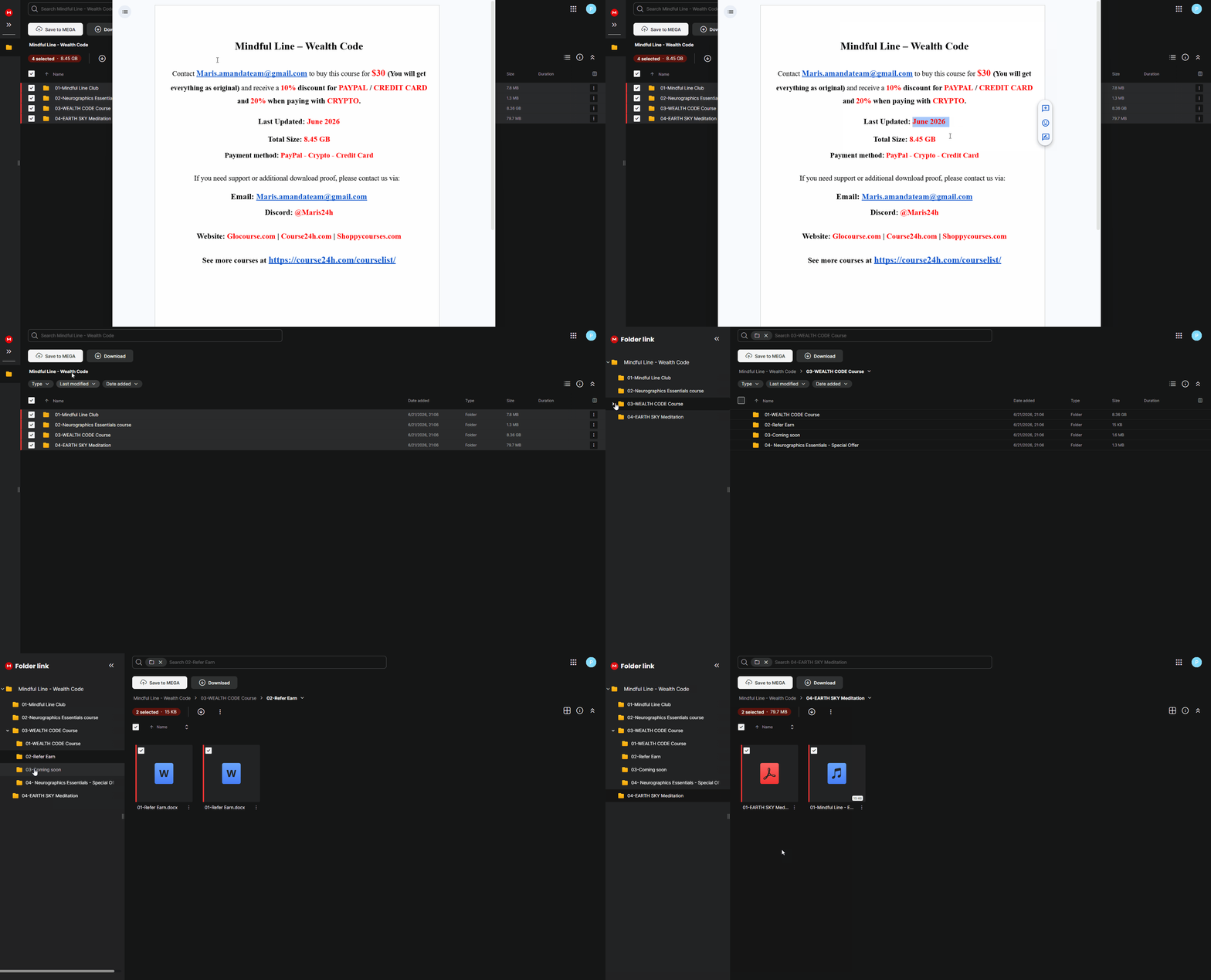
Mindful Line – Wealth Code
Many people work hard yet continue to struggle financially, not necessarily because they lack opportunities,
but because they carry deeply ingrained beliefs about money, success, and self-worth.
These beliefs can influence financial decisions, risk tolerance, earning potential, and long-term wealth-building behavior.
Wealth Code program appears to focus on helping participants examine and reshape their relationship with money through a combination of mindset work,
self-awareness practices, and personal development principles.
The program is designed around the idea that financial outcomes are often influenced by internal beliefs, habits, and emotional patterns.
Core learning areas may include:
Money mindset development
Limiting belief identification
Financial psychology
Habit formation
Goal setting and vision creation
Personal transformation
Understanding The Concept Of A Wealth Code
A central philosophy of the program is that individuals often operate according to unconscious “wealth codes” -internal beliefs and emotional patterns
that influence how they earn, spend, save, and invest money.
Foundational concepts may include:
Scarcity versus abundance thinking
Self-worth and financial identity
Emotional relationships with money
Belief systems and conditioning
Wealth consciousness
Personal responsibility

Identifying Limiting Money Beliefs
Many people develop beliefs about money during childhood or through life experiences.
These beliefs can unconsciously affect financial behaviors and opportunities.
Topics may include:
Fear of financial failure
Money-related guilt
Fear of success
Scarcity thinking
Self-sabotaging behaviors
Hidden assumptions about wealth
Understanding Financial Behaviors And Habits
Financial success is often influenced by daily decisions and repeated behaviors.
Wealth Code may explore how habits contribute to long-term financial outcomes.
Behavioral topics may include:
Spending awareness
Saving discipline
Goal-oriented decision-making
Accountability systems
Consistency and routines
Personal finance habits
Be the first to review “Mindful Line – Wealth Code”
Related products

Self-help



Health & Fitness


Self-help


Self-help
Reviews
There are no reviews yet.